Where Does North Georgia's Tap Water Come From?
Almost every North Georgia city draws drinking water from one of three sources: Lake Lanier, the Chattahoochee River, or a combination of the two. A handful of smaller cities also use groundwater wells or buy treated water from neighboring counties.
Lake Lanier supplies:
- Cumming and Forsyth County
- Gwinnett County (via Shoal Creek Filter Plant and Lanier Filter Plant)
- Gainesville and Hall County
- Buford (partial)
The Chattahoochee River supplies:
- City of Atlanta
- North Fulton County (Alpharetta, Johns Creek, Roswell, Sandy Springs, Milton)
Mixed or alternate sources include:
- Hoschton (groundwater wells plus Gwinnett, Jackson, and Barrow County connections)
- Winder (purchased from Upper Oconee Basin Water Authority - Bear Creek and Middle Oconee River)
- Jefferson and Jackson County (purchased surface water)
Where your home's water actually comes from depends on your specific address and water utility, which can vary even within the same city. For a deeper look at the region's largest reservoir, see our Lake Lanier drinking water guide.
Same lake, same river, same chlorine chemistry. The differences between cities are smaller than the differences between houses.
Honest Water Of Georgia
Want better water at home? Tell us what you want to improve. We will recommend the simplest fitting option and send your installed price in writing.
What's Commonly Found in North Georgia Tap Water
Across nearly every utility in the region, independent testing by the Environmental Working Group has identified similar patterns. The most consistent finding: disinfection byproducts.
Disinfection byproducts (DBPs) are not contaminants that come from "dirty pipes." They are compounds formed when chlorine or chloramine, used to kill bacteria and pathogens, reacts with naturally occurring organic matter in surface water sources. Disinfection is necessary - untreated surface water can carry serious health risks. But the byproducts that form during treatment are now widely studied for their long-term health implications.
The DBPs most consistently found above EWG health guidelines in North Georgia water:
- Total trihalomethanes (TTHMs) - including chloroform, bromodichloromethane, dibromochloromethane, and bromoform
- Haloacetic acids (HAA5 and HAA9) - including dichloroacetic acid and trichloroacetic acid
In addition to DBPs, several utilities show:
- Chromium-6 - a heavy metal that can occur naturally or from industrial pollution
- Nitrates and nitrites - often from fertilizer runoff, septic systems, or stormwater
- PFAS - "forever chemicals" detected at varying levels across U.S. utilities
EWG's findings are based on utility-reported data and independent analysis, compared against stricter health-based guidelines than federal regulation requires.
What Happened to North Georgia Water in 2025-2026
A few real events from the past year are worth knowing, because they explain a lot of what homeowners have been noticing at the tap:
May 2026 - downtown Atlanta boil-water advisory. A power failure at the Hemphill treatment plant dropped pressure across parts of downtown, triggering a boil advisory on May 22, 2026. It followed the June 2024 water main breaks that shut down much of the city. Our Atlanta tap water guide covers the full timeline.
December 2025 - Atlanta lead letters. The Department of Watershed Management mailed notification letters about potential lead service lines under the EPA's new Lead and Copper Rule Improvements. The city says no lead lines have been found to date, but thousands of connections remain unverified.
January 2026 - Gainesville's algae fight. Facing what it called unprecedented taste and odor challenges, the City of Gainesville deployed ultrasonic algae-control buoys near its Riverside plant intake on Lake Lanier. Details in our Gainesville water guide.
The pattern: aging infrastructure and a living reservoir mean legally-safe water can still be interrupted, discolored, or foul-tasting - which is why more North Georgia homeowners are adding their own filtration as the last line of defense.
Federal Standards vs Health-Based Guidelines
This is the most misunderstood part of tap water reporting. Both can be true at the same time:
- Your utility's water can be in full compliance with federal Safe Drinking Water Act standards.
- Independent testing can also show contaminants above stricter health-based guidelines.
The Environmental Working Group explains the gap: federal legal limits for many drinking water contaminants have not been updated in nearly 20 years. EWG's health-based guidelines reflect more current scientific research on long-term exposure risks.
For most North Georgia utilities, the most recent EPA-assessed quarter showed full federal compliance. That doesn't mean nothing is in the water. It means nothing is above the limits set in the early 2000s.
Want help choosing between better whole-home taste, less scale where hardness is present, and dedicated drinking water? Start with a clear recommendation and installed price.
Opens a short quote form on this page. A real Honest Water team member reviews it and follows up by phone or email. No in-home sales appointment.
Is North Georgia Water Hard?
Yes, in most of the region. Both Lake Lanier and the Chattahoochee River contain natural minerals - primarily calcium and magnesium - that make the water moderately hard.
Common signs of hard water in North Georgia homes:
- White spots on dishes and glassware after washing
- Cloudy or filmy glass after dishwashing
- Soap not lathering well in showers
- Dry skin sensations or dull hair after bathing
- Scale buildup on faucets, showerheads, and fixtures
- White crust around water heater fittings
- Reduced water heater efficiency over time
- Plumbing wear and shortened appliance lifespan
Hard water itself is not classified as a health concern. But it does shorten the life of water heaters, dishwashers, washing machines, and plumbing, and it's the source of most "my water just feels different" complaints.
A water softener uses ion exchange to reduce hardness minerals. It is not the same thing as a contaminant filter. Many North Georgia homes benefit from both a softener (for hardness) and a filtration system (for chlorine, taste, and disinfection byproducts).
Taste, Smell, and Local Water Complaints
The most common North Georgia tap water complaints fall into a few categories:
Chlorine taste and smell: Especially noticeable in summer, when utilities use more disinfectant. Carbon filtration is highly effective at reducing this.
Earthy or musty taste, especially in fall: Lake Lanier and Chattahoochee River source water can experience seasonal turnover, where deeper water mixes with surface water. This brings naturally occurring compounds like MIB (2-methylisoborneol) and geosmin to the surface, both produced by algae and bacteria. Local utilities have publicly acknowledged this is the source of seasonal taste/smell complaints. The compounds affect taste and smell but are not considered harmful at typical levels.
"Swimming pool" smell: Usually chlorine or chloramine residual. Often more pronounced in newer homes or apartments closer to treatment plants.
Rotten egg smell: Usually indicates hydrogen sulfide, more common in well water than city water. If you're on city water and notice this, contact your utility.
What Filtration Options Actually Help
There's no single "best" filter. The right choice depends on what you're trying to address.
Pitcher filters (Brita, etc.)
Effective for: chlorine taste, basic taste improvement.
Not effective for: most disinfection byproducts, PFAS, lead in plumbing, hard water.
Best for: renters, single-person households, light use.
Faucet-mount filters
Effective for: chlorine, some VOCs, some lead reduction depending on cartridge.
Not effective for: hard water, PFAS, broad contaminant reduction.
Best for: kitchen sink supplementation.
Refrigerator filters
Effective for: chlorine and some basic contaminants in fridge water/ice only.
Not effective for: anything else in the home (showers, dishwashers, washing machines, other faucets).
Best for: cold water and ice quality only.
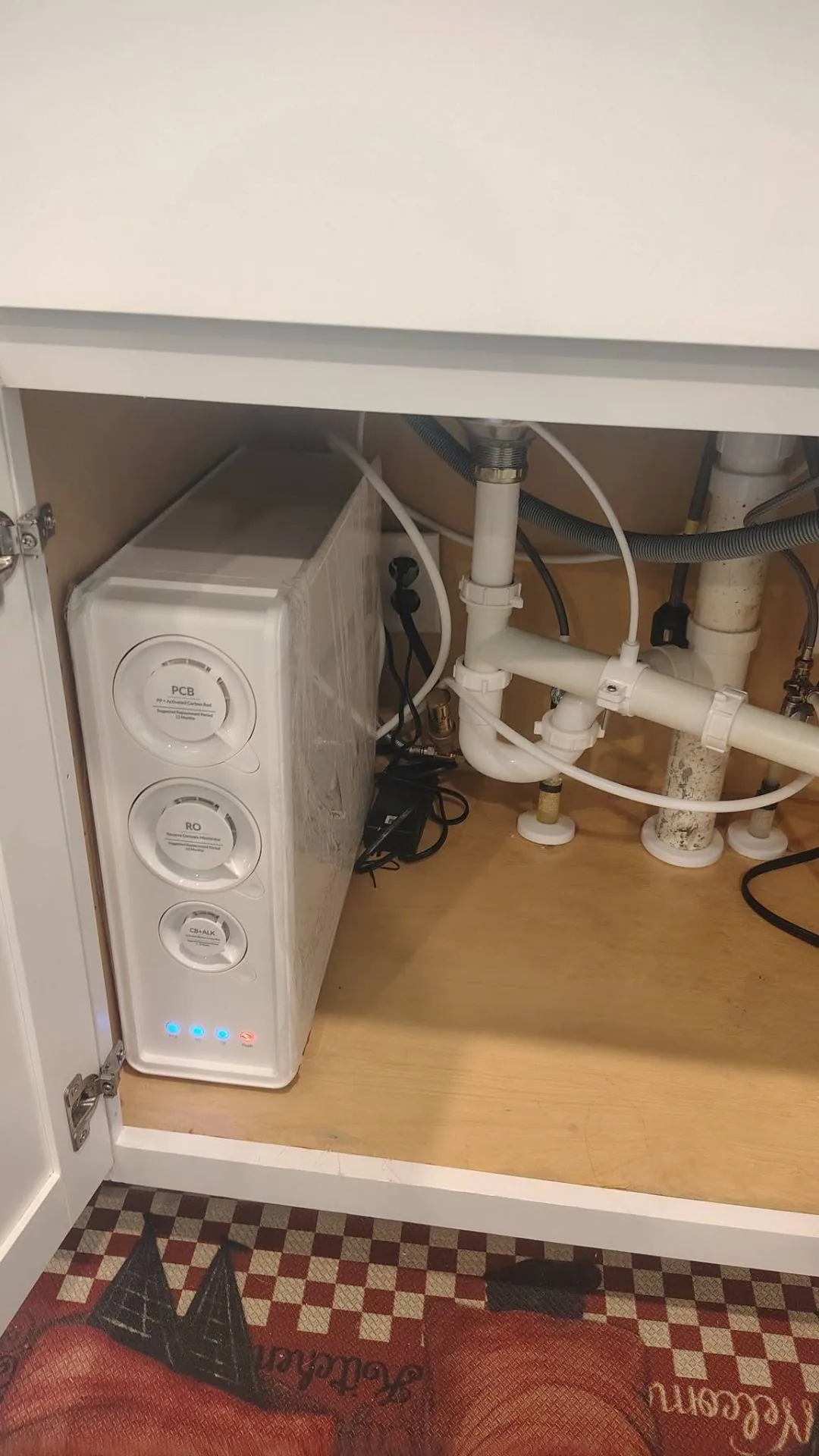
Under-sink reverse osmosis (RO)
Effective for: nearly all contaminants - lead, PFAS, nitrates, fluoride, disinfection byproducts, chromium-6, and most everything else.
Not effective for: water at other faucets in the home.
Best for: drinking water and cooking water specifically.
Effective for: chlorine, chloramine, taste, smell, MIB/geosmin, many disinfection byproducts at every faucet.
Not effective for: hard water minerals (need a softener for that).
Best for: comprehensive filtration at every tap, shower, and appliance.
Water softeners
Effective for: hard water minerals (calcium and magnesium), scale, soap lather, appliance protection.
Not effective for: contaminant removal (this is not a filter).
Best for: hard water symptoms.
For most North Georgia homes with city water, the comprehensive setup is:
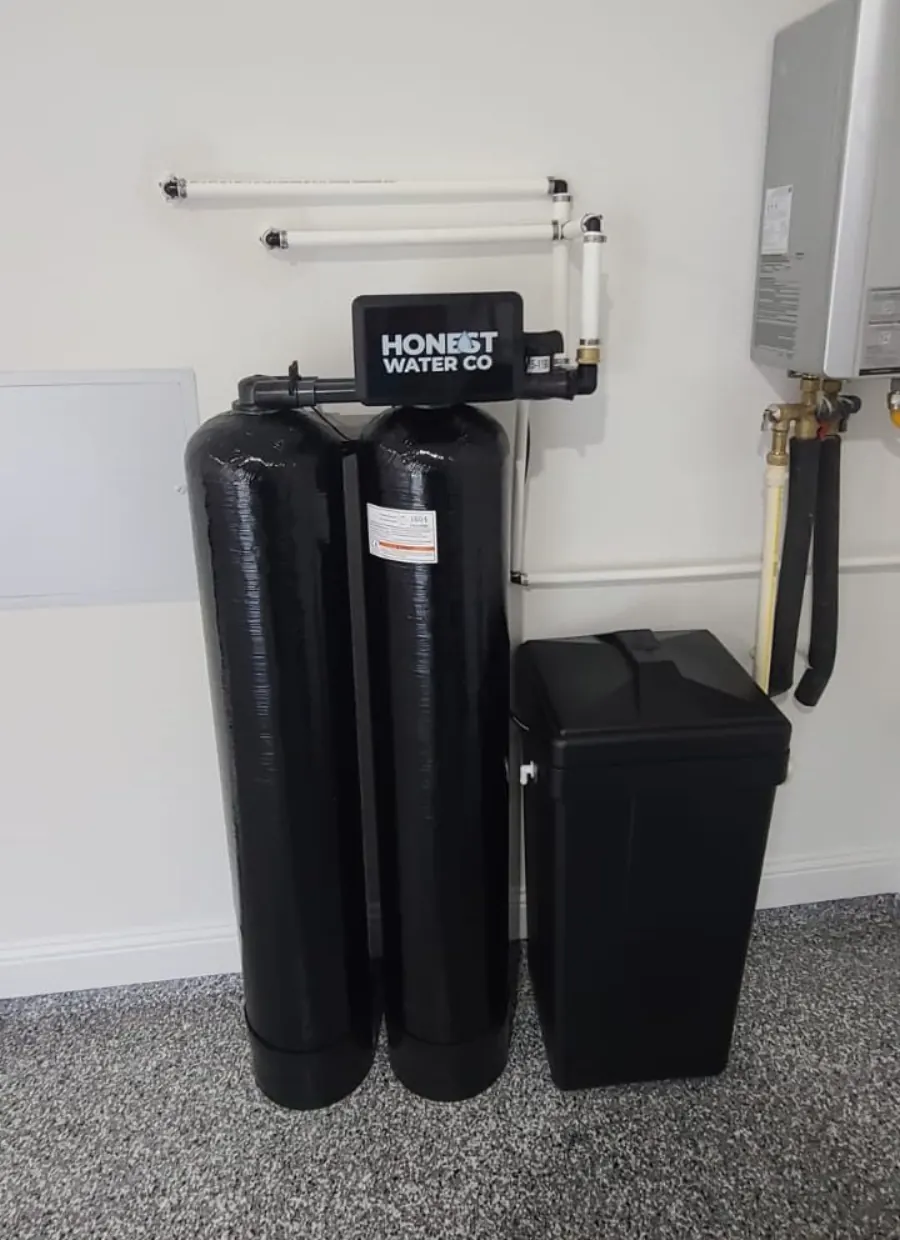
- Whole-home carbon filtration at the main line
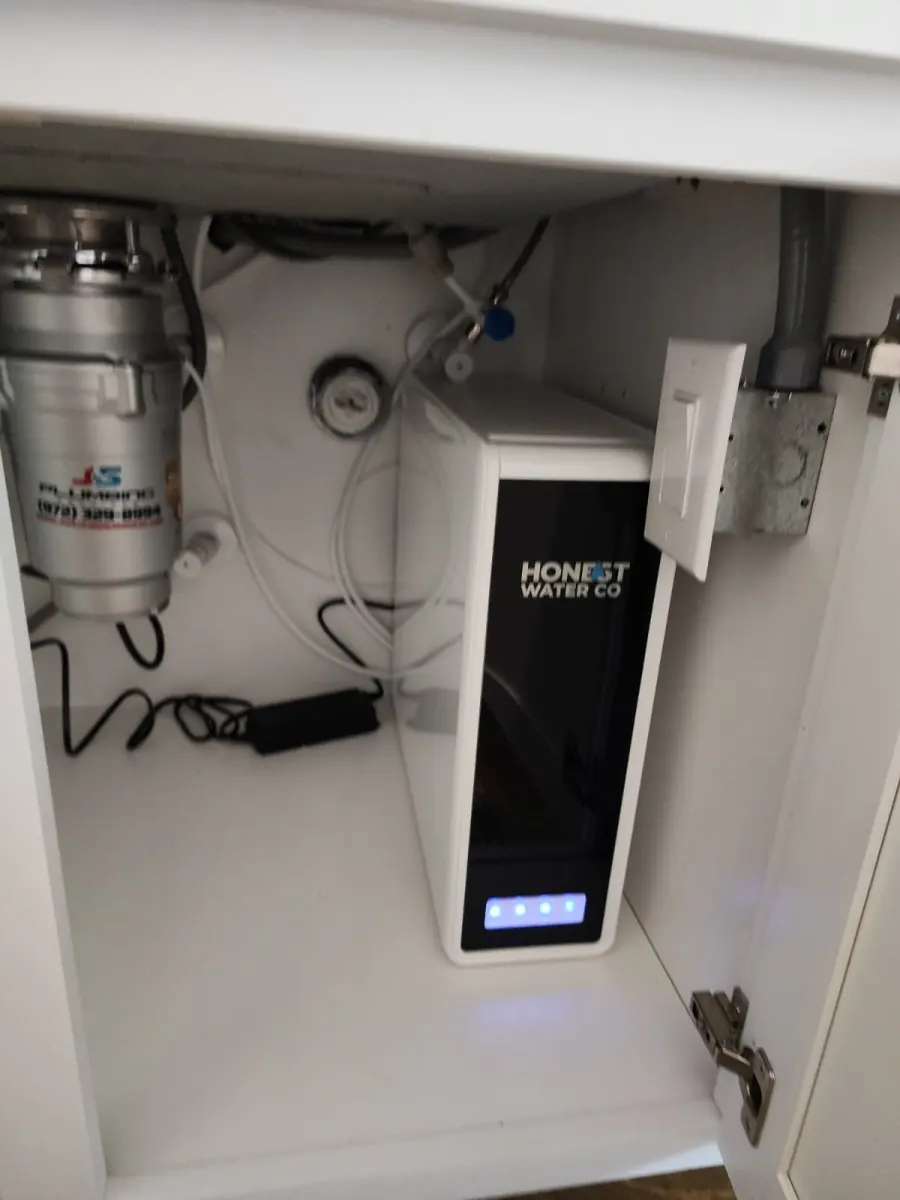
- Under-sink reverse osmosis at the kitchen sink
- Water softener if hardness symptoms are present
How Honest Water Of Georgia Helps
We're a local, family-owned Georgia business that installs whole-home water systems for just $3,492 fully installed. No high-pressure in-home sales, no three-hour kitchen table pitches, no inflated quotes from national brands that include their commissioned sales reps and corporate overhead.
We offer a free 15-minute water review to help you understand what's actually in your water and what (if anything) you need. If your water is fine and you don't need a system, we'll tell you. If you do, we'll quote you upfront.
Request clear installed pricing for whole-home filtration, softening or reverse osmosis in North Georgia, GA—without an in-home sales pitch.
Opens a short quote form on this page. We send your North Georgia installed pricing in writing after a quick 15-minute consultation.
Frequently Asked Questions
Sources & citations
- EWG Tap Water Database
- City of Atlanta Department of Watershed Management
- Cumming Utilities 2025 Consumer Confidence Report
- Gwinnett County Department of Water Resources
- Gainesville Water Resources
- City of Hoschton 2024 Water Quality Report
- Barrow County 2025 Water Quality Report
- Jackson County Water & Sewer Authority
- U.S. EPA Safe Drinking Water Act