Lawrenceville Water: Who to Call for Outages, Billing, and Service
Looking for the water utility itself? Lawrenceville homes get their water from Gwinnett County Department of Water Resources. The City of Lawrenceville sold its water distribution system to Gwinnett County, and city water customers moved over on December 1, 2020. Your water (and sewer) bill now comes from Gwinnett County, even inside city limits.
Water outages, main breaks, sewer emergencies (24/7): Gwinnett DWR dispatch, 678-376-7000.
Water bills, start or stop service: Gwinnett DWR Customer Care, 678-376-6800 (staffed Monday-Friday 8 a.m.-5 p.m., automated system 24 hours).
Electric, natural gas, or trash (still run by the city): City of Lawrenceville Utilities customer service, 678-407-6675; after hours 770-339-2410.
After any outage or pressure loss, run cold taps for a few minutes and follow any boil-water notice until the utility lifts it. If your question is about how the water tastes, feels, or what's actually in it, the sections below cover that.
Want better water at home? Tell us what you want to improve. We will recommend the simplest fitting option and send your installed price in writing.
Where Lawrenceville's Tap Water Comes From
Lawrenceville tap water is supplied by Gwinnett County Department of Water Resources (DWR), which serves more than 975,000 residents across the county including Lawrenceville, Dacula, Suwanee, Duluth, and Sugar Hill. Gwinnett DWR draws raw water from Lake Lanier and treats it at the Shoal Creek Filter Plant or the Lanier Filter Plant.
Because Lawrenceville's housing stock spans decades, the water leaves the same treatment plant but enters very different home plumbing systems - copper, PEX, older galvanized lines in some cases - which affects what homeowners see and feel at the tap even when the source water is identical.
For deeper context on the source, see our Lake Lanier Drinking Water Guide. For nearby comparisons on the same Gwinnett DWR water, see our guides for Suwanee, Dacula, and Buford.
What's in Lawrenceville Tap Water (EWG + CCR Data)
EWG's database, drawing on Gwinnett County DWR testing data, identifies multiple contaminants above EWG's stricter health-based guidelines.
Disinfection Byproducts (DBPs)
DBPs form when chlorine reacts with naturally occurring organic matter in Lake Lanier water. Studies have linked long-term DBP exposure to elevated health risks.
- HAA9 (Haloacetic acids, 9-compound group): 21.4 ppb - 357x EWG guideline
- HAA5 (Haloacetic acids, 5-compound group): 21.4 ppb - 214x EWG guideline
- Chloroform: 26.9 ppb - 67x EWG guideline
- Dichloroacetic acid: 12 ppb - 60x EWG guideline
- Bromodichloromethane: 2.75 ppb - 46x EWG guideline
- Dibromochloromethane: 1.88 ppb - 19x EWG guideline
Heavy Metals & Other Contaminants
Chromium-6: 0.084 ppb - 4.2x EWG guideline. Reverse osmosis is one of the few point-of-use technologies that effectively reduces it.
Nitrate/nitrite: 0.426 ppm - 3x EWG guideline. May be associated with agricultural runoff and septic discharge in the upstream watershed.
Older Lawrenceville homes built before 1986 may also have lead solder or fixtures in their plumbing - that's a home-specific risk separate from utility water quality, and it's one more reason a home-specific water test matters here.
Federal Standards vs Health-Based Guidelines
If Gwinnett County water is in federal compliance, why do so many contaminants exceed health guidelines?
EWG points to a regulatory gap: federal Maximum Contaminant Levels for many drinking water contaminants haven't been updated in nearly 20 years. EWG's guidelines reflect more current research on long-term exposure, especially for disinfection byproducts.
Two things can be simultaneously true:
- Gwinnett County DWR meets all federal Safe Drinking Water Act requirements.
- Independent testing identifies multiple contaminants above current health-based recommendations.
Want help choosing between better whole-home taste, less scale where hardness is present, and dedicated drinking water? Start with a clear recommendation and installed price.
Opens a short quote form on this page. A real Honest Water team member reviews it and follows up by phone or email. No in-home sales appointment.
Is Lawrenceville Water Hard?
Yes. Lawrenceville water is moderately hard, due to natural calcium and magnesium in the Lake Lanier watershed. The damage hard water does to your plumbing and appliances depends on how long it's been doing it - which is where Lawrenceville's mix of older and newer homes really matters.
In older Lawrenceville homes:
- Decades of accumulated scale narrow the inside diameter of pipes
- Water heaters work harder and fail earlier (often before 10 years)
- Reduced water pressure as scale builds in fixtures
- More frequent fixture and supply line failures
In newer Lawrenceville homes:
- White spots on shower glass and dishes within the first year
- Soap scum, dry skin, and "slimy" feel after showers
- Scale on new faucets and showerheads within 1 to 2 years
A water softener uses ion exchange to reduce hardness minerals. In an older home, it slows additional damage and protects what's left. In a newer home, it prevents the damage from starting.
Taste, Smell, and Local Water Complaints
Lawrenceville homeowners report a familiar set of taste and smell issues, plus a distribution-side wrinkle.
Chlorine taste and smell: Most noticeable in summer. Carbon filtration handles it well.
Earthy or musty taste in fall: Lake Lanier turnover. MIB and geosmin can contribute to an earthy or musty taste.
"Old pipes" taste in older homes: A faint metallic taste in older Lawrenceville homes can be associated with aging in-home plumbing rather than the source water itself. Whole-home filtration plus under-sink RO is the most thorough fix.
What Filtration Options Actually Help
Different filtration systems address different problems. For Lawrenceville specifically, the right system depends on whether you're protecting older plumbing or newer construction.
Pitcher filters: Reduce chlorine taste. Limited effect on disinfection byproducts. Don't address chromium-6 or hard water.
Refrigerator filters: Only treat the water flowing to the fridge.
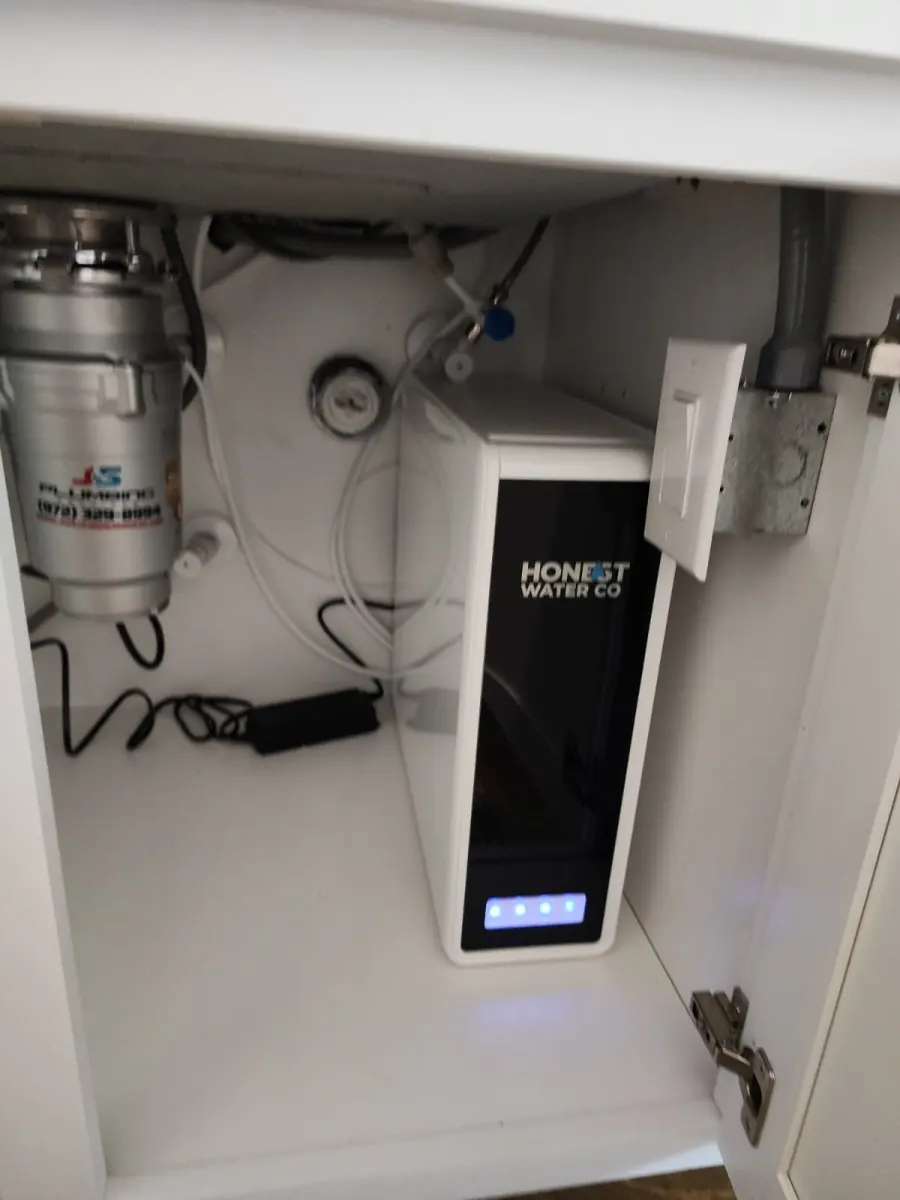
Under-sink reverse osmosis (RO): The most effective option for drinking and cooking water. Reduces chromium-6, DBPs, nitrates, lead, and PFAS - the lead reduction matters specifically for older Lawrenceville homes with pre-1986 plumbing.
Whole-home carbon filtration: Addresses chlorine, taste, smell, and many DBPs at every faucet and shower.
Water softener: The single best investment for protecting both older plumbing and new appliances from scale.
What Honest Water Recommends
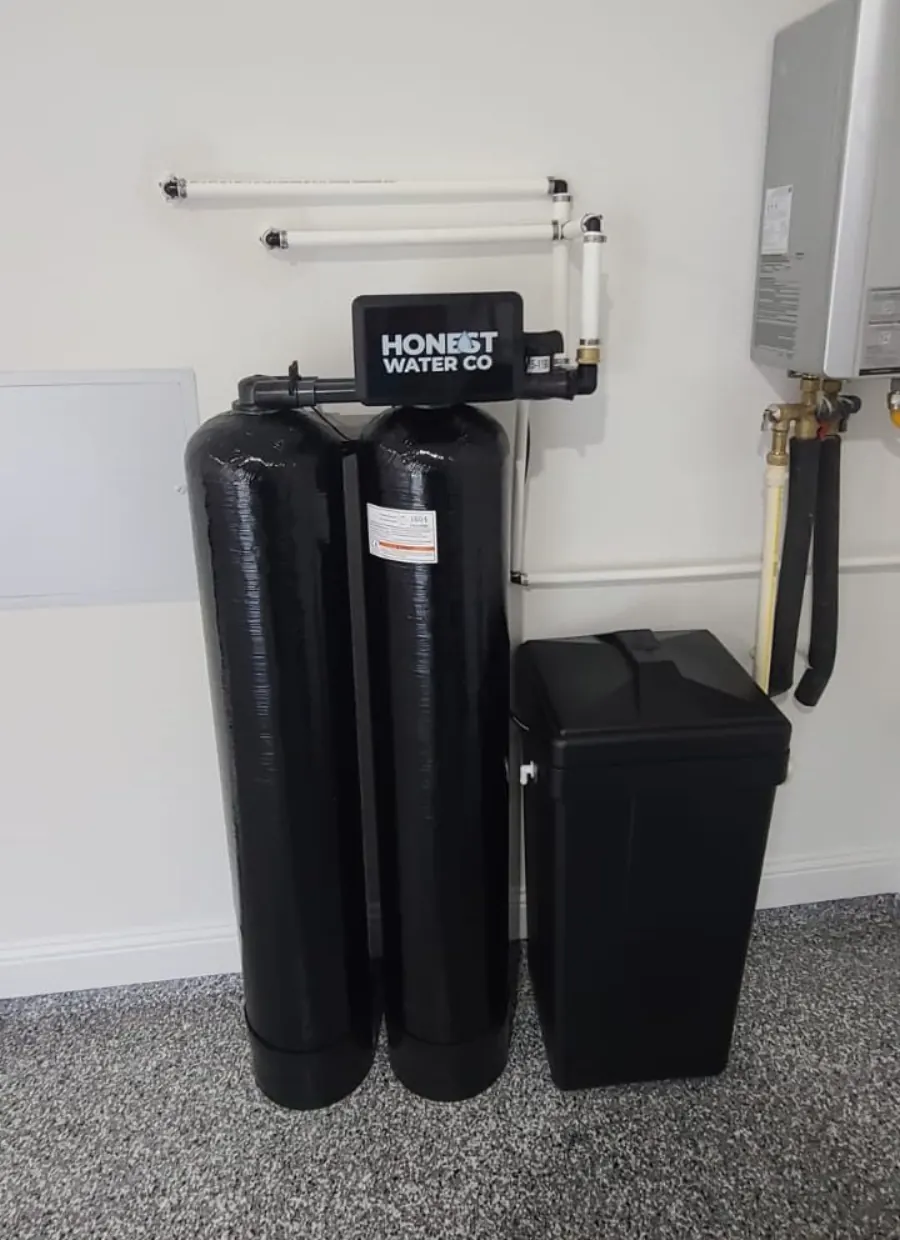
For a typical Lawrenceville home - whether it's an older home with aging plumbing or a newer home with fresh fixtures - we generally recommend a whole-home carbon filtration system to handle taste and DBPs at every tap, an under-sink RO for drinking and cooking water, and a water softener to protect plumbing and extend appliance life. The water heater alone usually justifies the softener investment.
Honest Water Of Georgia is a local family-owned business offering water softener and whole-home filtration installation in Lawrenceville. Our complete whole-home setup is just $3,492 fully installed.
Request clear installed pricing for whole-home filtration, softening or reverse osmosis in Lawrenceville, GA—without an in-home sales pitch.
Opens a short quote form on this page. We send your Lawrenceville installed pricing in writing after a quick 15-minute consultation.