Save 65%+ during the month of August

North Georgia Water Quality

Is Atlanta Tap Water Safe to Drink? 2026 Guide (Updated August)

By Honest Water Of Georgia Team · Last Updated: August 26, 2026

Short answer: yes - Atlanta tap water is legally safe to drink in 2026. It meets every federal Safe Drinking Water Act standard. But "legal" and "ideal" are not the same thing: EWG's analysis of Atlanta utility data flags 10 contaminants above stricter health-based guidelines - including HAA9 at 905x and TTHMs at 275x - and the past two years brought real reliability scares, from the June 2024 water main breaks to a downtown boil-water advisory in May 2026.

The water comes from the Chattahoochee River and serves over 1 million residents. Here's what's actually in your tap as of August 26, 2026, what the recent advisories and lead letters mean, and which filtration options actually help.

Where Atlanta's Tap Water Comes From

The City of Atlanta provides drinking water to 1,089,893 people across the metro area. The source is the Chattahoochee River, which flows from Lake Lanier in North Georgia down through the metro region.

Atlanta's water is managed by the Atlanta Department of Watershed Management, which operates treatment facilities that draw raw water from the Chattahoochee, treat it with chlorine and other disinfectants, and distribute it through the city's pipe network. Roughly 98 million gallons are treated and distributed per day.

The Chattahoochee River watershed covers a large area and drains land from across the region. This means Atlanta's source water reflects upstream conditions - agricultural runoff, urban stormwater, treated wastewater discharges, and natural organic matter all flow into the source water before treatment.

Atlanta shares this Chattahoochee source - and many of the same characteristics - with its North Fulton neighbors. See our guides for Roswell, Alpharetta, and Cumming for nearby comparisons, or zoom out to the North Georgia Water Quality Guide for the regional picture.

What's in Atlanta Tap Water (EWG + CCR Data)

According to the Environmental Working Group's database, which covers Atlanta utility testing data from 2013–2024, Atlanta tap water contains 21 detected contaminants, 10 of which exceed EWG's health-based guidelines.

The most elevated findings:

Disinfection Byproducts (DBPs)

These are formed when chlorine reacts with naturally occurring organic matter in source water. Disinfection is necessary to kill bacteria, but the byproducts have been linked in studies to long-term health risks.

  • HAA9 (Haloacetic acids, 9-compound group): 54.3 ppb - 905x EWG guideline
  • HAA5 (Haloacetic acids, 5-compound group): 32.6 ppb - 326x EWG guideline
  • TTHMs (Total Trihalomethanes): 41.3 ppb - 275x EWG guideline
  • Bromodichloromethane: 5.25 ppb - 88x EWG guideline
  • Chloroform: 33 ppb - 82x EWG guideline
  • Dichloroacetic acid: 15.7 ppb - 79x EWG guideline

Other Contaminants

Nitrate/nitrite: 0.794 ppm - 5.7x EWG guideline. Often comes from agricultural runoff, septic systems, and stormwater. Studies have linked elevated levels to risks for infants in particular.

The EPA's most recent assessed quarter for Atlanta's utility was April–June 2024, during which the utility was in compliance with federal health-based drinking water standards.

Boil Advisories and Lead Letters: What Happened in 2024-2026

Beyond day-to-day water quality, Atlanta has had several high-profile water events recently. Here's the factual rundown:

June 2024 - citywide main breaks: Back-to-back failures of aging transmission mains left large parts of the city with outages and days of boil-water advisories. It was a wake-up call about the age of Atlanta's distribution system - some of the pipe network dates back a century.

May 2026 - downtown boil-water advisory: A power failure at the Hemphill Water Treatment Plant triggered a precautionary boil-water advisory for the downtown corridor. The Department of Watershed Management lifted it after sampling cleared, but it was another reminder that treatment and distribution hiccups reach your tap with zero warning.

December 2025 - lead notification letters: Thousands of Atlanta and Fulton County households received letters about service lines of "unknown" material. Per the Department of Watershed Management, these are an EPA regulatory requirement under the new Lead and Copper Rule Improvements - the city states it has not found a single lead service line in hundreds of samples, but must keep notifying customers until EPA's verification threshold is met. If you got one of these letters, it does not mean your line contains lead - it means it hasn't been verified yet.

The takeaway: Atlanta's treated water is generally in compliance, but the system around it is aging. Events like these are why many metro homeowners choose filtration as their own last line of defense rather than relying solely on infrastructure upstream.

Federal Standards vs Health-Based Guidelines

If Atlanta's water is in federal compliance, why do so many contaminants exceed health guidelines?

The Environmental Working Group answers this directly: federal legal limits for drinking water contaminants have not been updated in nearly 20 years. Many were set in the early 2000s based on the science available at the time. EWG's guidelines reflect more current research on long-term exposure risk.

Two things can be simultaneously true:

  • Atlanta water meets all federal Safe Drinking Water Act requirements.
  • Independent testing identifies multiple contaminants at levels above current health-based recommendations.

For most people, occasional consumption of Atlanta tap water is not an immediate concern. For infants, pregnant women, immunocompromised people, and households with long-term exposure considerations, it's worth understanding what's actually in the water and weighing filtration options.

Want help understanding what's actually in your home's water? Honest Water Of Georgia offers a free 15-minute water review with honest recommendations and no high-pressure sales.

Opens a short quote form on this page. A real Honest Water team member reviews it and follows up by phone or email. No in-home sales appointment.

Is Atlanta Water Hard?

Yes. Atlanta's water is moderately hard, due to natural calcium and magnesium from the Chattahoochee River source.

Most Atlanta-area homeowners notice some or all of these signs:

  • White spots and film on dishes and glassware
  • Cloudy or "etched" looking glass after the dishwasher
  • Soap that doesn't lather well in the shower
  • Dry skin sensations after bathing, especially in winter
  • Dull or stiff-feeling hair
  • Scale buildup on faucets, showerheads, and toilet bowls
  • White crust around water heater fittings and hot water lines
  • Reduced water heater efficiency over time

Hard water is not classified as a health concern, but it absolutely shortens the life of plumbing, fixtures, and appliances. A water softener uses ion exchange to reduce hardness minerals. It's a separate system from filtration - softeners don't remove chlorine, contaminants, or disinfection byproducts.

If you're dealing with both hard water symptoms and concerns about taste, smell, or contaminants, you'll likely want both a softener and a filtration system.

Taste, Smell, and Local Water Complaints

Atlanta has had recurring conversations about tap water taste and smell, especially in certain seasons.

Chlorine taste and smell: Most noticeable in summer when utilities use more disinfectant. Carbon filtration is highly effective at reducing this.

Earthy or musty taste, especially in fall: This is tied to the Chattahoochee/Lake Lanier source water. Both lakes and rivers experience seasonal turnover, where deeper water mixes with surface water. This brings naturally occurring compounds like MIB (2-methylisoborneol) and geosmin to the surface. Both are produced by algae and bacteria and are responsible for earthy/musty taste in many surface water systems across the country.

The Atlanta Department of Watershed Management has publicly stated that these compounds affect taste and smell but are not considered harmful at typical levels.

Chloramine-related smells: If your water smells like chlorine but more "swimming pool" than "bleach," your utility may use chloramine (a longer-lasting disinfectant). Chloramine is harder to remove than chlorine and requires specific filtration media to address.

What Filtration Options Actually Help

Different filtration systems address different contaminants. For Atlanta water specifically, here's what works:

Pitcher filters (Brita, PUR, etc.): Reduces chlorine taste. Limited effect on disinfection byproducts. Does not address hard water. Reasonable starting point for renters.

Faucet-mount filters: Better than pitcher filters for chlorine and some VOCs. Some cartridges reduce lead. Does not address hard water or whole-home use.

Refrigerator filters: Only treats water flowing to the fridge. Does nothing for showers, dishwashers, washing machines, or other faucets. Don't rely on this as your home's only filtration.

Under-sink reverse osmosis (RO): The most effective option for drinking water specifically. Reduces nearly all of Atlanta's elevated contaminants including TTHMs, HAA5, HAA9, chloroform, chromium-6, lead, nitrates, and PFAS. Installed at the kitchen sink.

Whole-home carbon filtration: Addresses chlorine, chloramine, taste, smell, MIB/geosmin, and many disinfection byproducts at every faucet in the home. Doesn't address hard water (need a softener for that).

Water softener: Addresses hard water symptoms. Doesn't address contaminants.

For most Atlanta homes with city water, the comprehensive setup is whole-home carbon filtration + under-sink RO + water softener if hardness is present.

What Honest Water Recommends

For an Atlanta home dealing with the standard issues - chlorine smell, disinfection byproducts above health guidelines, hard water symptoms, and concerns about drinking water - we typically recommend a whole-home carbon filtration system to reduce DBPs and chlorine at every tap, plus an under-sink RO for drinking water, plus a water softener if hardness symptoms are present.

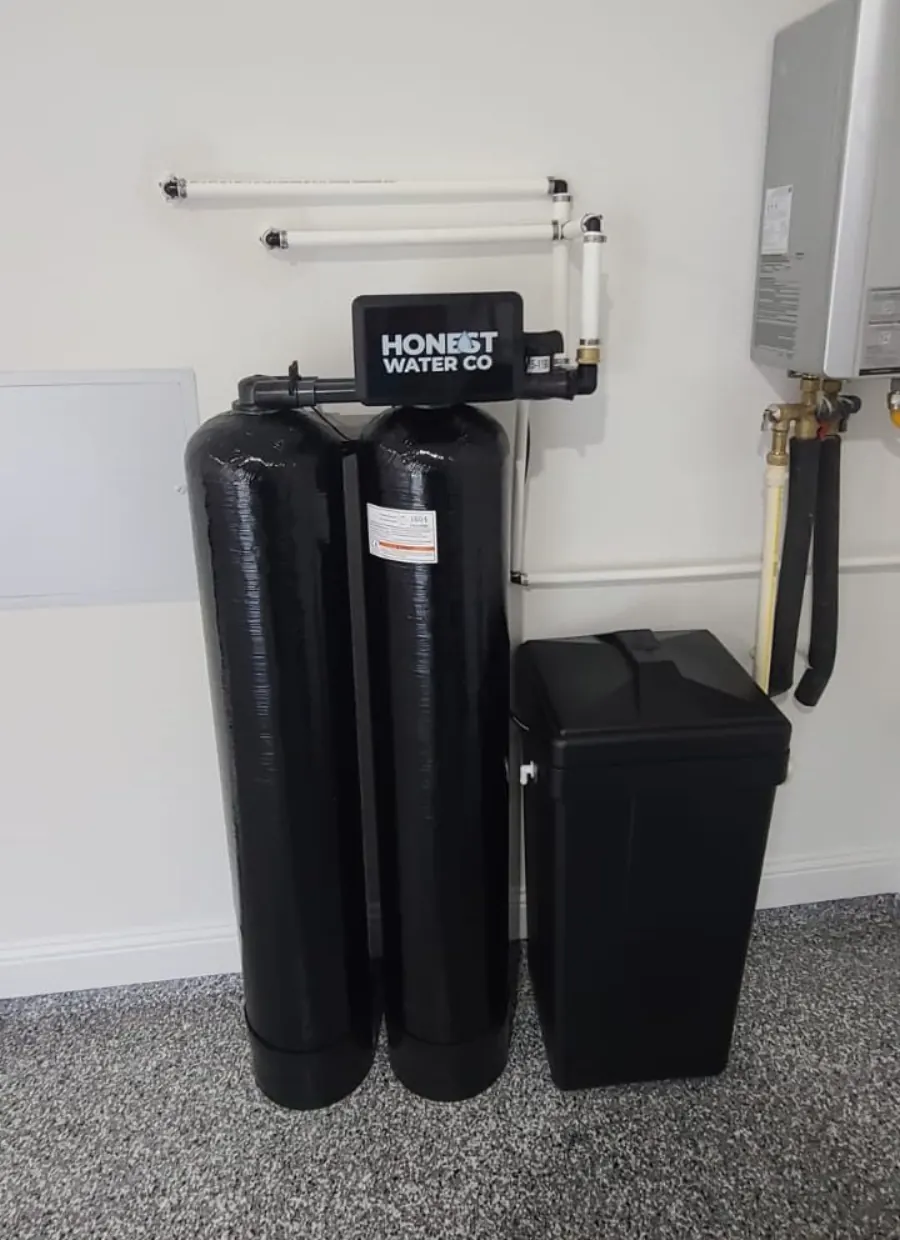
Honest Water Of Georgia is a local family-owned business offering water softener and whole-home filtration installation in Atlanta. Our complete whole-home setup is just $3,492 fully installed. That includes the system, professional installation, lifetime warranty on the tank, and ongoing service. No high-pressure in-home sales pitch, no inflated quote that includes a commissioned rep's salary and corporate overhead. See the full price breakdown for every system size in our water softener cost in Georgia guide.

Schedule your free water review today and get upfront pricing on whole-home water filtration and water softener installation in Atlanta, GA.

Opens a short quote form on this page. We send your Atlanta installed pricing in writing after a quick 15-minute consultation.

Frequently Asked Questions

Yes, legally - Atlanta tap water meets all federal Safe Drinking Water Act standards in 2026. However, independent testing by the Environmental Working Group identifies 10 contaminants above stricter health-based guidelines, primarily disinfection byproducts from chlorination, and a power failure at the Hemphill plant triggered a downtown boil-water advisory in May 2026. Whether to drink unfiltered tap water depends on your household's situation and risk tolerance.

Sources & Citations