Where Cumming's Tap Water Comes From
Cumming Utilities serves 58,661 residents across the city and surrounding Forsyth County service area. The source is Lake Lanier - the same reservoir that supplies more than a million people across North Georgia.
Cumming pumps raw water directly from Lake Lanier and treats it at the city's 24 million-gallon-per-day Potable Water Production Facility on Dahlonega Highway. Per the Cumming 2025 Consumer Confidence Report, the plant uses conventional surface water treatment - coagulation, sedimentation, filtration, and chlorine-based disinfection - before water is distributed through the city's pipe network.
Because Lake Lanier is a reservoir fed by the Chattahoochee and Chestatee Rivers, the source water reflects upstream conditions: agricultural runoff, stormwater, lakefront development, and seasonal lake turnover all influence what arrives at the treatment plant.
Want to understand Lake Lanier source water in more depth? Read our complete Lake Lanier Drinking Water Guide.
For nearby comparisons on other Lake Lanier-fed cities, see our guides for Buford, Dacula, and Gainesville.
Want better water at home? Tell us what you want to improve. We will recommend the simplest fitting option and send your installed price in writing.
What's in Cumming Tap Water (EWG + CCR Data)
The Environmental Working Group's database, drawing on Cumming Utilities testing data from 2015–2024, identifies 16 detected contaminants in Cumming tap water. Of those, 10 exceed EWG's stricter health-based guidelines.
Disinfection Byproducts (DBPs)
DBPs form when chlorine reacts with organic matter naturally present in Lake Lanier water. Disinfection is required to control bacteria, but studies have linked long-term DBP exposure to elevated health risks.
- HAA9 (Haloacetic acids, 9-compound group): 33 ppb - 550x EWG guideline
- HAA5 (Haloacetic acids, 5-compound group): 25.7 ppb - 257x EWG guideline
- TTHMs (Total Trihalomethanes): 26.9 ppb - 180x EWG guideline
- Dichloroacetic acid: 11.9 ppb - 60x EWG guideline
- Chloroform: 22.4 ppb - 56x EWG guideline
- Bromodichloromethane: 2.89 ppb - 48x EWG guideline
- Dibromochloromethane: 1.06 ppb - 11x EWG guideline
Other Contaminants
Nitrate/nitrite: 0.387 ppm - 2.8x EWG guideline. Often associated with agricultural runoff and septic discharge in the upstream watershed. Studies have linked elevated nitrate exposure to specific risks for infants.
EWG reports these levels reflect the most recent multi-year testing window. The utility was in compliance with federal Safe Drinking Water Act standards during the most recent EPA-assessed quarter.
Federal Standards vs Health-Based Guidelines
If Cumming's water is in federal compliance, why do so many contaminants exceed health guidelines?
EWG explains the gap directly: most federal Maximum Contaminant Levels were set in the early 2000s and have not been updated to reflect newer research on long-term exposure. EWG's guidelines incorporate more recent science around cumulative risk, especially for disinfection byproducts.
Two things can be simultaneously true:
- Cumming water meets all federal Safe Drinking Water Act requirements.
- Independent testing identifies multiple contaminants above current health-based recommendations.
For most healthy adults, occasional consumption is not an immediate concern. For infants, pregnant women, immunocompromised individuals, and households thinking about long-term exposure, it's worth understanding what's actually in the water and whether filtration makes sense.
Want help choosing between better whole-home taste, less scale where hardness is present, and dedicated drinking water? Start with a clear recommendation and installed price.
Opens a short quote form on this page. A real Honest Water team member reviews it and follows up by phone or email. No in-home sales appointment.
Is Cumming Water Hard?
Yes. Cumming water is moderately hard thanks to natural calcium and magnesium picked up in the Lake Lanier watershed. This is one of the most common complaints we hear from new homeowners moving into Forsyth County.
Most Cumming-area homeowners notice some or all of these signs:
- Scale buildup on new fixtures, shower glass, and faucets within 2–3 years
- White spots and film on dishes and glassware after the dishwasher
- Soap that won't lather; "slimy" or "squeaky" feel after showering
- Dry skin and dull-feeling hair, especially in winter
- White crust around water heater fittings and hot water lines
- Reduced water heater efficiency and shorter appliance lifespan
We see this most often in newer Cumming construction - beautiful new fixtures that start showing scale and etching within the first couple of years. Hard water isn't a classified health concern, but it shortens the life of plumbing, fixtures, and appliances. A water softener uses ion exchange to reduce hardness minerals; it's separate from filtration and won't remove chlorine or DBPs.
Taste, Smell, and Local Water Complaints
Cumming homeowners report a few recurring water complaints, and most of them tie back to the Lake Lanier source.
Earthy or musty taste in fall: This is the classic Lake Lanier seasonal turnover effect. As the lake cools, deeper water mixes with surface water and brings naturally occurring compounds - MIB (2-methylisoborneol) and geosmin - to the intake. Both are produced by algae and bacteria in surface water systems and can contribute to that earthy or musty taste, but are not considered harmful at typical levels.
Chlorine taste and smell: Most noticeable in summer when the utility uses more disinfectant to keep water safe in longer distribution lines. Carbon filtration is highly effective at reducing this.
Scale and "white residue": This is hard water, not a treatment issue. It shows up most on new construction in fast-growing Forsyth County neighborhoods.
What Filtration Options Actually Help
Different filtration systems address different problems. For Cumming water specifically, here's what tends to work:
Pitcher filters (Brita, PUR, etc.): Reduces chlorine taste and some basic contaminants. Limited effect on disinfection byproducts. Does nothing for hard water. Reasonable starting point for renters.
Faucet-mount filters: Better than pitcher filters for chlorine and some VOCs. Cartridges vary widely on what they treat.
Refrigerator filters: Only treat water going to the fridge. Don't help with showers, dishwashers, washing machines, or other faucets.
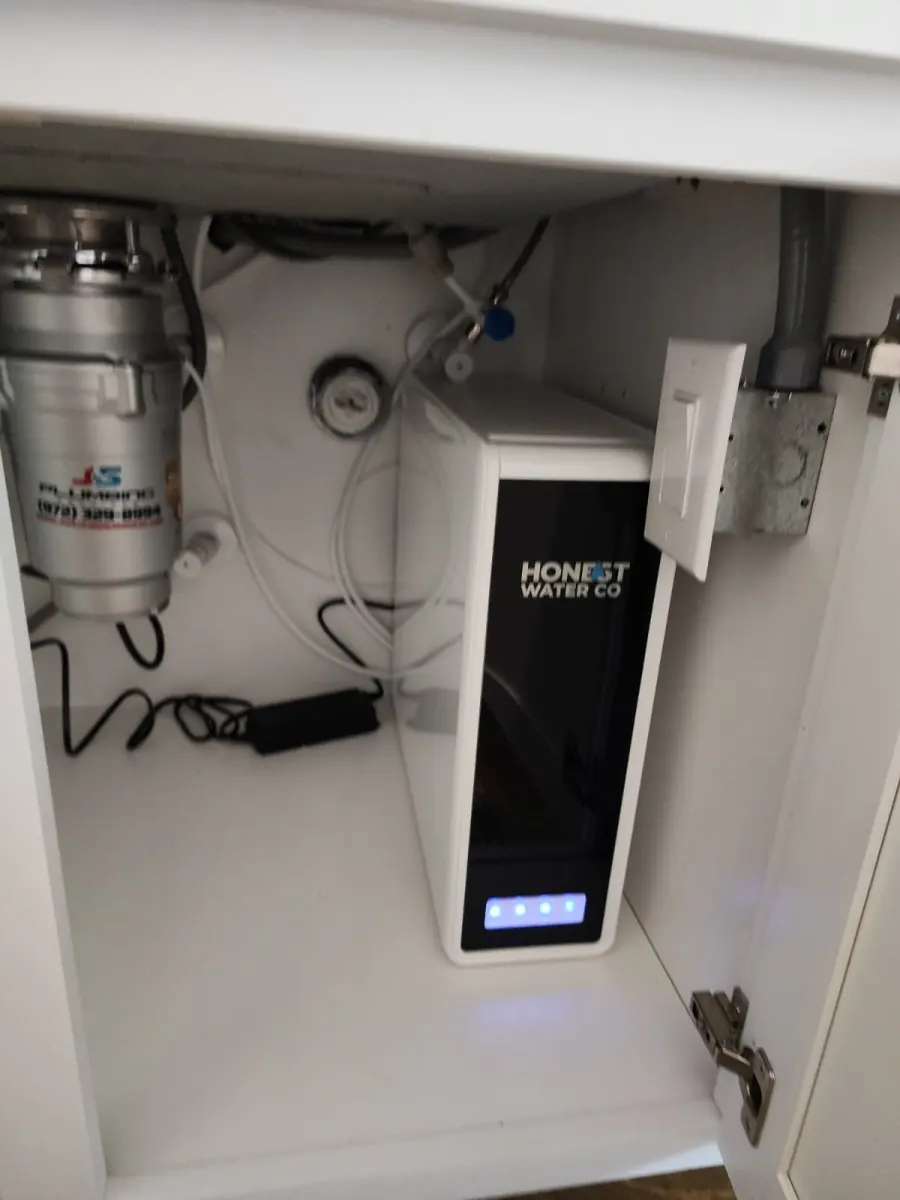
Under-sink reverse osmosis (RO): The most effective option for drinking water specifically. Reduces nearly all of Cumming's elevated contaminants - TTHMs, HAA5, HAA9, chloroform, nitrates, lead, and PFAS. Installed at the kitchen sink.
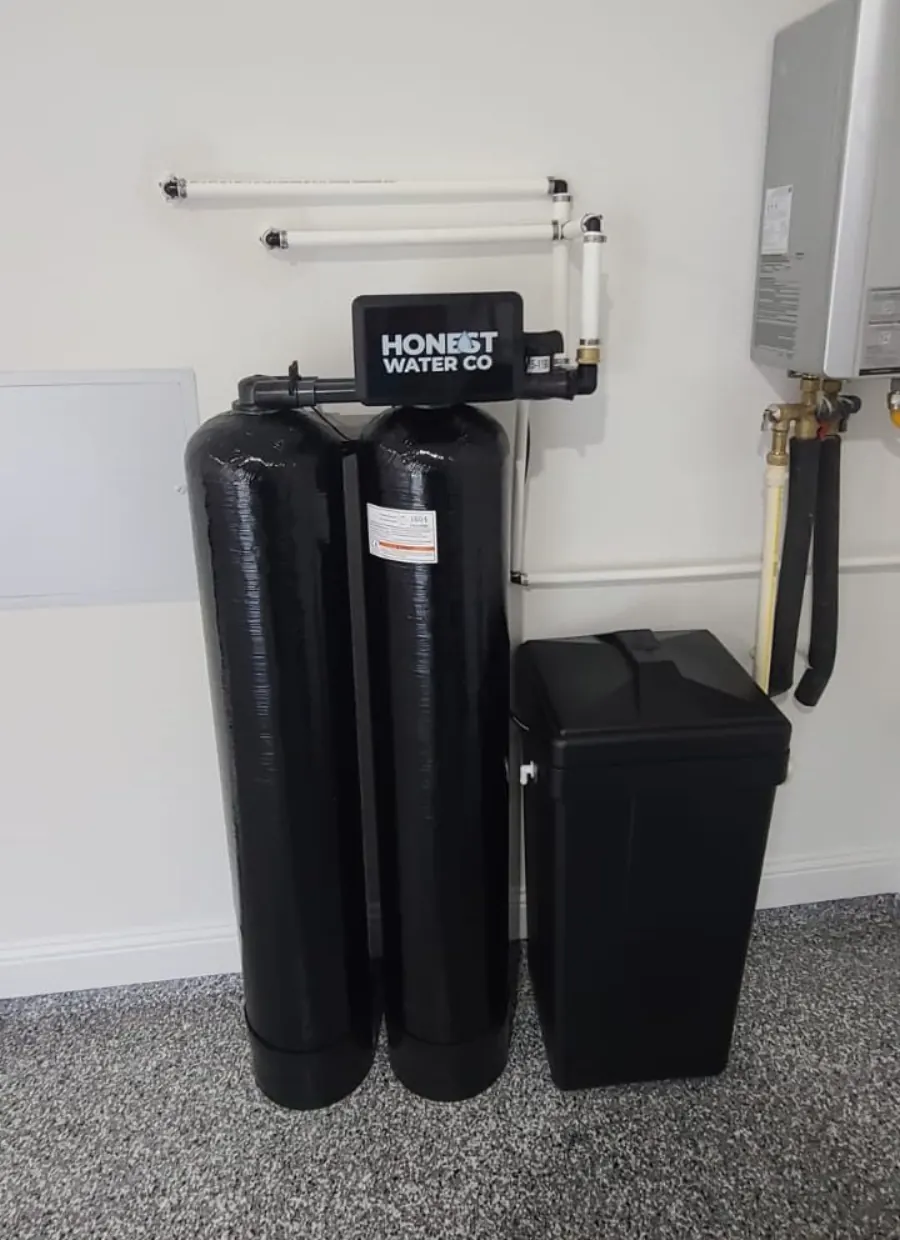
Whole-home carbon filtration: Addresses chlorine, taste, smell, MIB/geosmin, and many DBPs at every faucet and shower in the home. Doesn't address hard water on its own.
Water softener: Targets hard water symptoms - scale, soap scum, dry skin, appliance wear. Doesn't address contaminants.
For most Cumming homes on Lake Lanier source water, the comprehensive setup is whole-home carbon filtration + under-sink RO + a water softener.
What Honest Water Recommends
For a typical Cumming home dealing with the standard issues - fall taste/odor, chlorine in summer, DBPs above health guidelines, and hard-water scale on newer fixtures - we generally recommend a whole-home carbon filtration system to handle taste/smell and DBPs at every tap, an under-sink RO system for drinking and cooking water, and a water softener if hardness symptoms are showing up.
Honest Water Of Georgia is a local family-owned business offering water softener and whole-home filtration installation in Cumming. Our complete whole-home setup is just $3,492 fully installed - system, professional installation, lifetime tank warranty, and ongoing service included. No three-hour in-home sales pitch and no inflated quote that bakes in a commissioned rep's salary.
Request clear installed pricing for whole-home filtration, softening or reverse osmosis in Cumming, GA—without an in-home sales pitch.
Opens a short quote form on this page. We send your Cumming installed pricing in writing after a quick 15-minute consultation.