City of Hoschton Water: Who to Call for Billing, Service, and Emergencies
Looking for the water utility itself? The City of Hoschton runs its own water and sewer service through the Public Works department, with billing handled at Hoschton City Hall, 61 City Square.
Water bills, new service, questions: Hoschton City Hall, 706-654-3034, Monday-Friday 8 a.m.-4:30 p.m.
After-hours water emergencies (leaks, main breaks, no water): 470-791-8931.
The city also offers Eye on Water so you can track your household usage online. After any outage or pressure loss, run cold taps for a few minutes and follow any boil-water notice until the city lifts it. If your question is about what's in the water, the sections below cover that.
Want better water at home? Tell us what you want to improve. We will recommend the simplest fitting option and send your installed price in writing.
Where Hoschton's Tap Water Comes From
Hoschton is unusual. Most cities have one utility and one source. Hoschton has many.
The City of Hoschton's 2024 Water Quality Report states that the city's distribution system includes five groundwater wells, plus connections to Gwinnett County Water System, Jackson County Water System, and Barrow County Water System. Different addresses within Hoschton may receive water primarily from different sources depending on which part of the distribution system they're connected to.
Hoschton homeowners: your water may not match your neighbor's. With five groundwater wells and connections to three county water systems, what comes out of your tap depends on your specific address. This is exactly why we offer a free water review - to test YOUR home's water, not assume based on the city.
For neighboring context, see our guides for Braselton, Jefferson, and Winder.
What's in Hoschton Tap Water (EWG + CCR Data)
EWG's database, drawing on Hoschton Water System testing data from 2018 to 2023, identifies several disinfection byproducts above EWG's stricter health-based guidelines. Because Hoschton blends sources, contaminant levels in any specific home may vary from the system-wide average reported here.
Disinfection Byproducts (DBPs)
DBPs form when chlorine reacts with naturally occurring organic matter in source water. Studies have linked long-term DBP exposure to elevated health risks.
- Chloroform: 26.2 ppb - 66x EWG guideline
- Dichloroacetic acid: 12.9 ppb - 64x EWG guideline
- Bromodichloromethane: 3.24 ppb - 54x EWG guideline
Groundwater wells generally have lower DBP levels than purchased surface water (because there's less organic matter to react with chlorine), so a Hoschton home pulling primarily from a well source may see different numbers than a home pulling from a purchased surface water connection. The utility's CCR reports compliance with federal Safe Drinking Water Act standards.
Federal Standards vs Health-Based Guidelines
If Hoschton's water is in federal compliance, why do these contaminants exceed health guidelines?
EWG points to a regulatory gap: federal Maximum Contaminant Levels for many drinking water contaminants haven't been updated in nearly 20 years. EWG's guidelines reflect more current research on long-term exposure, particularly for disinfection byproducts.
Two things can be simultaneously true:
- Hoschton water meets all federal Safe Drinking Water Act requirements.
- Independent testing identifies several contaminants above current health-based recommendations.
And in Hoschton, there's a third factor: the system-wide average doesn't necessarily describe what's coming out of your specific tap. That's another reason a home-specific review can be more useful here than reading the citywide CCR.
Want help choosing between better whole-home taste, less scale where hardness is present, and dedicated drinking water? Start with a clear recommendation and installed price.
Opens a short quote form on this page. A real Honest Water team member reviews it and follows up by phone or email. No in-home sales appointment.
Is Hoschton Water Hard?
Yes - and hardness in Hoschton is especially address-dependent because of the mixed sources. Groundwater from local wells often carries higher mineral content than treated surface water purchased from neighboring counties, so two Hoschton homes can have noticeably different hardness levels.
Most Hoschton homeowners notice some or all of these signs:
- White spots and film on dishes and glassware
- Cloudy or "etched" looking glass after the dishwasher
- Soap that won't lather; "slimy" feel after showering
- Dry skin and dull-feeling hair, especially in winter
- Scale buildup on faucets, showerheads, and toilet bowls
- White crust around water heater fittings and hot water lines
- Reduced water heater efficiency over time
Hard water isn't classified as a health concern, but it shortens the life of plumbing, fixtures, and appliances. A water softener uses ion exchange to reduce hardness minerals - and the right size depends on your home's actual hardness, which we measure on-site during the free water review.
Taste, Smell, and Local Water Complaints
Hoschton homeowners report a wider variety of taste and smell complaints than most North Georgia communities - again, because the source isn't uniform.
Chlorine taste and smell: Most noticeable on connections drawing from purchased surface water. Carbon filtration is highly effective at reducing this.
Sulfur or "rotten egg" smell: Some Hoschton homes pulling from groundwater wells report a faint sulfur smell, which is associated with naturally occurring hydrogen sulfide in some Georgia groundwater. This requires a different treatment approach than DBP reduction - typically oxidation plus carbon, or specialty media.
Hardness/scale: Common across the city, but more pronounced on connections drawing from groundwater wells.
What Filtration Options Actually Help
Different filtration systems address different problems. In Hoschton, the right system depends on which source feeds your home - which is why we recommend testing first instead of assuming.
Pitcher filters: Reduce chlorine taste. Limited effect on disinfection byproducts. Not effective for sulfur or hard water.
Faucet-mount filters: Better than pitcher filters for chlorine and some VOCs.
Refrigerator filters: Only treat the water flowing to the fridge.
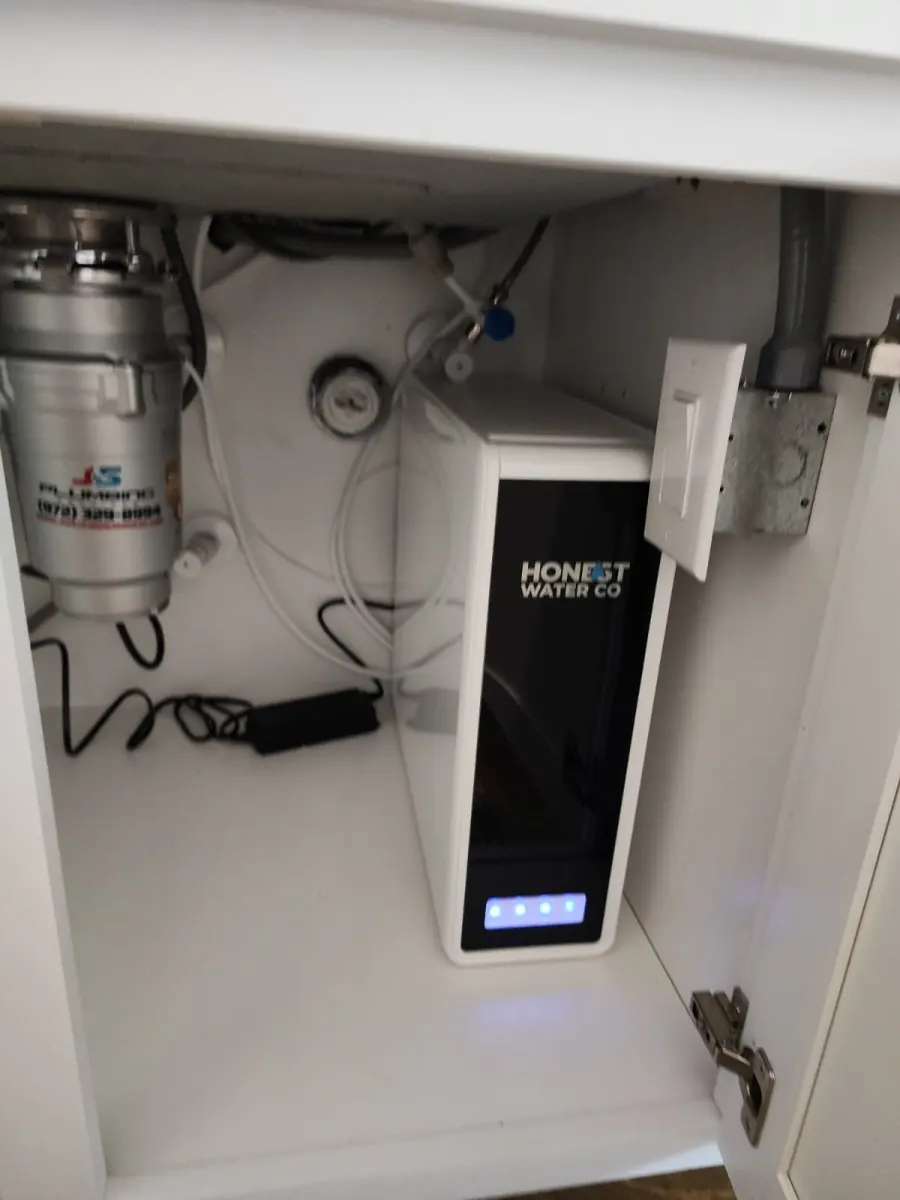
Under-sink reverse osmosis (RO): The most effective option for drinking water across all Hoschton source types. Reduces DBPs, lead, nitrates, PFAS, and many other contaminants regardless of source.
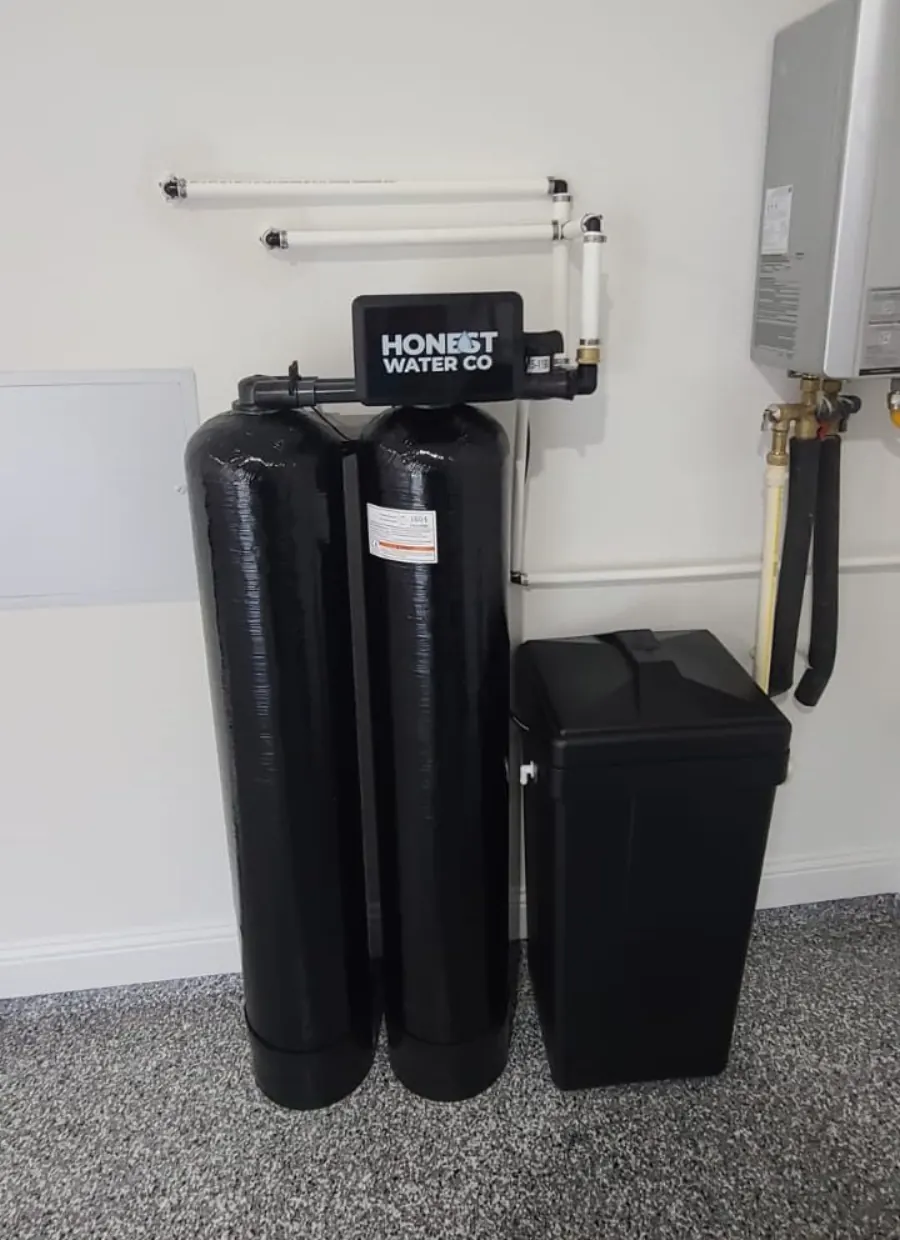
Whole-home carbon filtration: Addresses chlorine, taste, smell, and many DBPs at every faucet. For Hoschton homes seeing well-water-specific issues like sulfur, additional pre-treatment media may be needed.
Water softener: Targets hard water. Sizing depends on your home's actual hardness - which varies in Hoschton.
What Honest Water Recommends
For Hoschton more than almost any other North Georgia community, we recommend testing before specifying. The free water review is more than a sales call here - it's a real diagnostic step. Once we know which source primarily feeds your home and what's actually in the water, we typically recommend whole-home carbon filtration plus an under-sink RO for drinking water, plus a water softener sized to your home's measured hardness. Homes on well-heavy connections may need additional pre-treatment for sulfur or iron.
Honest Water Of Georgia is a local family-owned business offering water softener and whole-home filtration installation in Hoschton. Our complete whole-home setup is just $3,492 fully installed.
Request clear installed pricing for whole-home filtration, softening or reverse osmosis in Hoschton, GA—without an in-home sales pitch.
Opens a short quote form on this page. We send your Hoschton installed pricing in writing after a quick 15-minute consultation.